

Change Management Models
Option 3: Kotter’s 8 Step Change Model
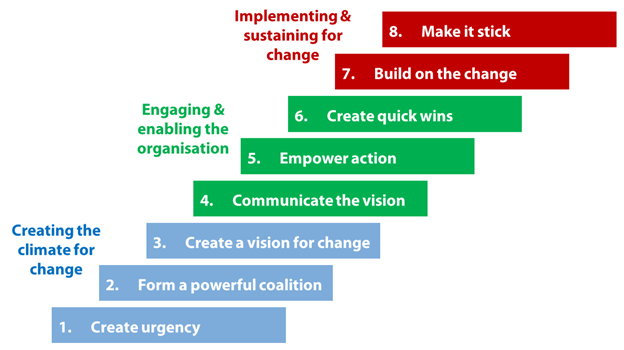
This model, created by Harvard University Professor John Kotter, causes change to become something of a ‘campaign’. The thought is that employees ‘buy in’ to the change after leaders convince them of the urgent need for change to occur.
There are 8 steps are involved in this model:
Frequently Asked Questions
What are the most effective change management models?
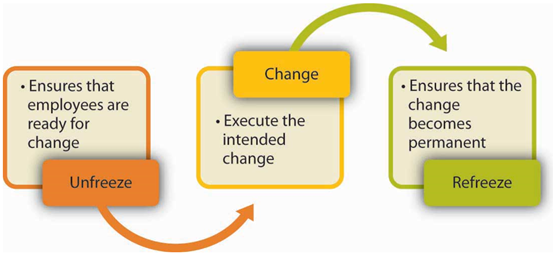
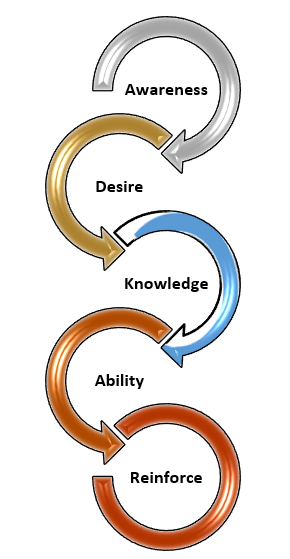
The most widely used frameworks are: Kotter’s 8-Step Model (emphasizes urgency, coalition, vision, communication, empowerment, quick wins, and sustaining change), ADKAR (Awareness, Desire, Knowledge, Ability, Reinforcement — a people-focused model from Prosci), and Lewin’s Change Model (Unfreeze-Change-Refreeze). Each works best in different contexts — ADKAR excels for individual behavior change, Kotter for large organizational transformations.
Why do most organizational change initiatives fail?
Research from McKinsey and Kotter estimates that 70% of change initiatives fail to achieve their goals. Common causes: insufficient communication of the “why,” lack of middle manager buy-in, underestimating the cultural dimension, failing to create early wins that build momentum, and not investing in employee capability development alongside process changes.
What is the HR function’s role in change management?
HR plays a critical dual role: as a change agent (designing the change strategy, communication plan, and training), and as a change subject (HR practices like performance management, compensation, and onboarding often need to change to support the new direction). HR is also responsible for assessing organizational readiness, managing workforce impacts, and monitoring the human side of change.
How can HR measure change management success?
Track: employee adoption rates (are people using the new process/system?), performance metrics before and after, survey data on clarity of purpose and confidence in change, voluntary turnover during the transition, and time to proficiency for key roles. Measuring inputs (training hours, communications sent) without measuring adoption is a common mistake.
How long should a change management initiative take?
There is no universal timeline, but most significant organizational changes take 12-24+ months to fully embed. Leaders consistently underestimate the time required for culture change specifically. Quick wins within 90 days build momentum, but sustainable behavior change requires consistent reinforcement over multiple performance cycles. Plan for a long arc.